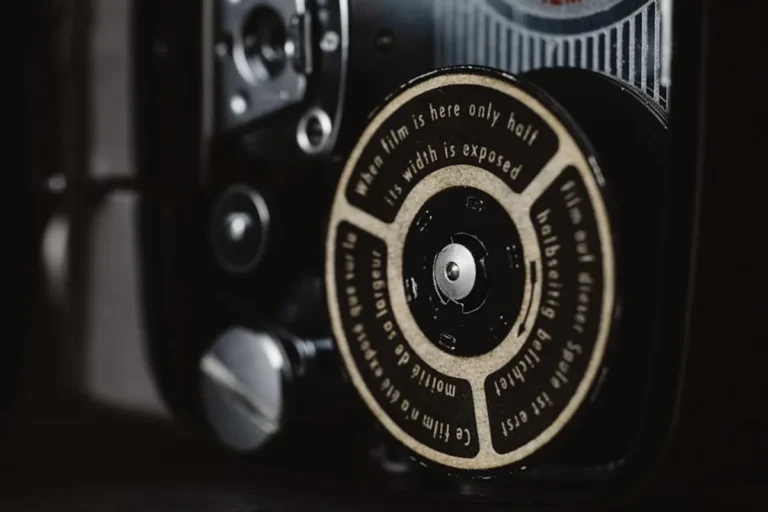

Building a film watchlist goes beyond simply noting titles to see later. For both individual viewers seeking a tailored experience and content strategists aiming to understand audience preferences, a system that categorizes films by mood and genre offers significant utility. This approach shifts from a purely chronological or popularity-driven list to one that aligns with specific emotional states and narrative structures, enhancing the viewing experience and providing richer data for content analysis.
Establishing Your Mood Taxonomy
The foundation of a mood-based watchlist is a clear understanding of the emotional states you want to address. Generic categories like "happy" or "sad" are a starting point, but a more granular taxonomy yields greater precision. Consider these dimensions:
- Energy Level: Do you want something energizing, relaxing, or thought-provoking? (e.g., high-octane action vs. meditative drama).
- Emotional Intensity: Are you seeking lighthearted escapism, profound introspection, or visceral tension? (e.g., romantic comedy vs. psychological thriller).
- Cognitive Engagement: Do you prefer a film that requires active analysis, provides comfort, or offers pure spectacle? (e.g., complex sci-fi vs. familiar animation).
- Social Context: Is this for solo viewing, a family night, or a group discussion? (e.g., independent art house vs. crowd-pleasing blockbuster).
Document these mood tags. A simple spreadsheet or a dedicated note-taking application allows for custom categories like #comfort_watch, #intellectual_challenge, #visceral_thrill, #lighthearted_escapism, or #thought_provoking. The goal is to create a personal lexicon that accurately reflects your desired viewing experience at any given moment.
Deconstructing Film Genres and Subgenres
While broad genres like "Action," "Comedy," or "Drama" are widely recognized, their utility for a mood-driven watchlist is limited. A deeper dive into subgenres and thematic elements provides the necessary specificity. For instance, within "Comedy," there's screwball, black, satirical, romantic, and slapstick, each eliciting distinct moods.
When adding a film, consider:
- Primary Genre: The overarching category (e.g., Sci-Fi).
- Subgenre: A more specific classification (e.g., Cyberpunk, Space Opera, Dystopian).
- Thematic Elements: Recurring ideas or motifs (e.g., redemption, existential dread, found family, societal critique). These often dictate the emotional resonance more directly than the broad genre.
- Narrative Tone: Is it cynical, optimistic, melancholic, or absurd?
Platforms like IMDb, Letterboxd, and The Movie Database (TMDB) offer extensive genre and keyword tagging, which can inform your own system. Pay attention to user-generated tags and critical reviews for insights into a film's less obvious emotional or thematic characteristics.
Integrating Mood and Genre for Discovery
The real power of this system emerges when mood and genre intersect. Instead of just "I want a comedy," you can specify "I want a lighthearted, escapist romantic comedy" or "an intellectually challenging, cynical neo-noir thriller." This precision aids significantly in film discovery, reducing decision fatigue.
Practical Application: Create a tagging system where films are assigned both mood and genre labels. For example, a film might be tagged: #comfort_watch, #nostalgic, #80s_action, #buddy_cop. When you're in a specific mood, you can filter your watchlist for films matching those tags.
Pro Tip: Avoid analysis paralysis when tagging. Start with 3-5 core mood categories and 5-7 primary genres. As you build your watchlist, refine and expand these tags based on what you actually find yourself searching for. The system should serve your viewing habits, not dictate them rigidly.
Structuring Your Watchlist for Accessibility
The method you choose for organizing your watchlist should prioritize ease of access and searchability. While dedicated film tracking apps exist, a simple, customizable solution often provides more flexibility for mood and genre tagging.
Best for Customization: A spreadsheet application (e.g., Google Sheets, Microsoft Excel) allows for columns such as:
- Film Title
- Director
- Year
- Primary Genre
- Subgenre(s)
- Mood Tags (e.g., #uplifting, #tense, #thought_provoking)
- Key Themes/Keywords
- Brief Synopsis
- Why it's on the list (e.g., "Recommended by X," "Director Y's early work")
- Runtime
- Where to Watch (if known)
This format enables powerful filtering and sorting, allowing you to quickly retrieve films that match specific criteria. For instance, filter by "Mood Tags" to find all films tagged #escapism when you need a mental break.
Best for Visual Browsing: Some film database apps allow for custom lists and tagging. While not always as flexible as a spreadsheet for complex queries, their visual interfaces can be appealing for browsing cover art associated with specific tags.
Refining Your Watchlist Over Time
A mood and genre-based watchlist is not static. Your preferences evolve, and new films are constantly released. Regularly review and update your list:
- Post-Viewing Reflection: After watching a film, assess whether it truly fit the mood and genre tags you assigned. Adjust them if necessary. Did that "lighthearted comedy" turn out to be surprisingly dark? Update its tags.
- Discovery Integration: As you encounter new films through recommendations, reviews, or streaming platform suggestions, immediately assess their potential mood and genre fit before adding them. This pre-screening saves time later.
- Pruning: Remove films that no longer appeal or that you've discovered don't align with your current interests. A curated, manageable list is more useful than an overwhelming one.
Actionable Watchlist Management
Implementing a mood and genre-driven watchlist transforms casual viewing into a more intentional and satisfying experience. For content creators and marketers, this structured approach provides granular insights into audience preferences, informing content development, recommendation algorithms, and targeted campaigns. By understanding the emotional and thematic drivers behind film choices, you can better serve specific viewer needs and predict engagement patterns. This system moves beyond broad demographic data to psychological and narrative alignment, offering a refined lens for both personal enjoyment and strategic content planning.
Frequently Asked Questions
How often should I update my mood and genre tags?
Update your tags as needed, especially after watching a film that didn't quite fit its initial classification. Your personal preferences and emotional landscape can shift, so a flexible, evolving tagging system is most effective.
Can this system be applied to TV shows or other media?
Absolutely. The principles of identifying mood and genre apply equally well to TV series, documentaries, video games, and even books. The key is to break down the content into its emotional impact and thematic categories.
What if a film fits multiple moods or genres?
Assign all relevant tags. A film can be both #tense and #thought_provoking, or a #sci_fi that is also a #romance. The more descriptive tags you use, the more filtering options you'll have when searching for a specific viewing experience.
Is there a commercial benefit to building such a watchlist?
For content strategists, publishers, and marketers, understanding granular mood and genre preferences allows for more precise audience segmentation, content curation, and recommendation engine development. It provides data beyond simple genre popularity, revealing deeper emotional drivers behind consumption choices.